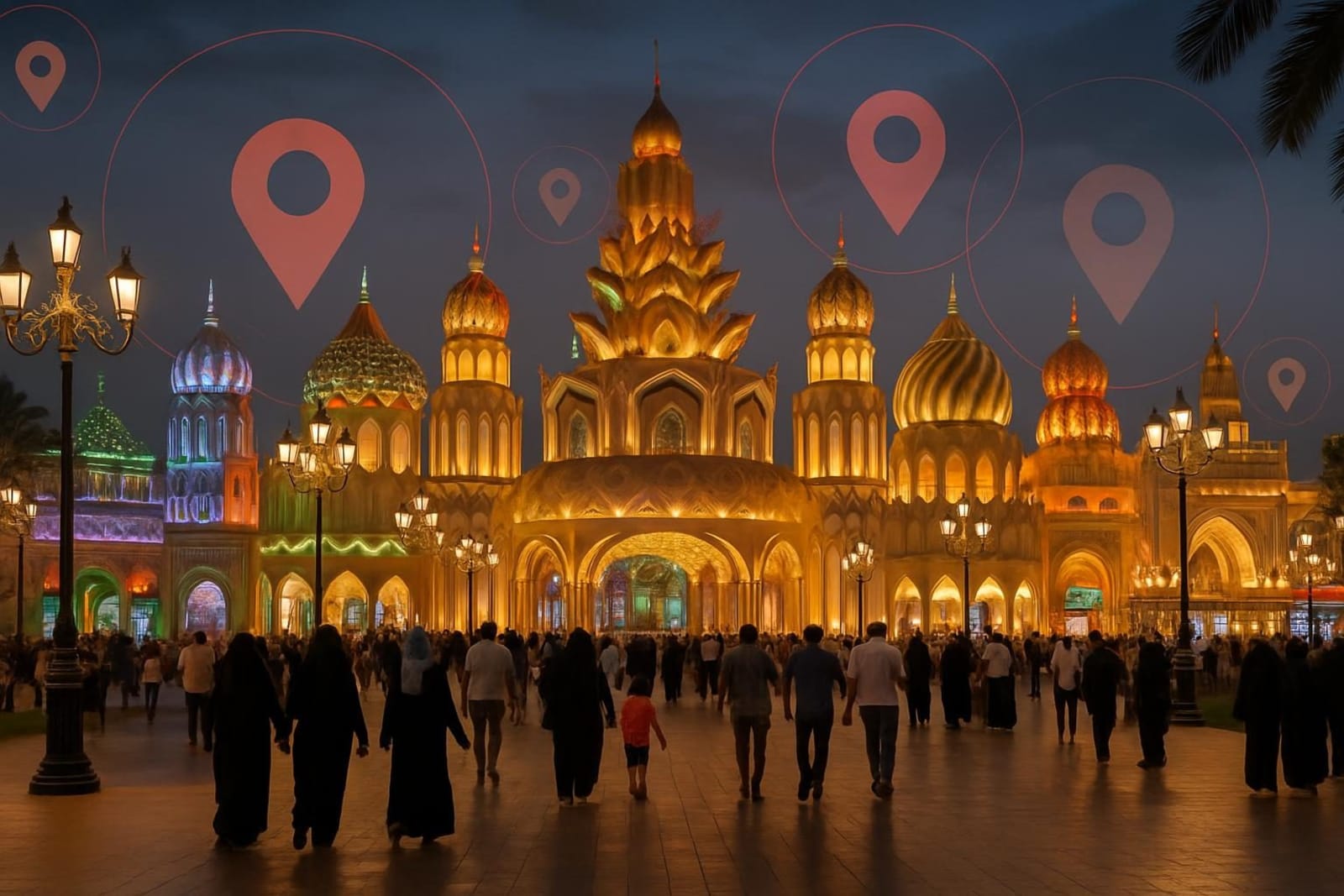
When Dubai’s Global Village swings its gates open on 14 October 2026, the city’s evening economy undergoes a palpable shift. Families trade air‑conditioned mall corridors for open‑air pavilions, and traffic streams along the E311 transform from commuter flow to a festive convoy of shoppers, diners and explorers.
For CMOs and growth leads, this seasonal surge is more than a cultural highlight, it is a high‑impact commercial window. Brands that simply watch from the sidelines miss the chance to intersect consumers at the exact moments they decide what to eat, where to refuel or which souvenir to buy.
In this article we unpack the behavioural pivot that the Global Village season creates, then walk you through proven omnichannel tactics, dynamic geo‑fencing, timed influencer collaborations and sector‑specific activation kits, that Red Dot Marketing has refined for UAE clients. By the end you will have a step‑by‑step framework you can deploy across October, November and the winter months that follow.
Understanding the Megavenue Season Shift
The reopening of Global Village marks the psychological end of the summer indoor‑habitation cycle. Visitor data from the venue’s own communications indicate that the season will attract nine to ten million guests across its eight‑month run, with a demographic mix that leans heavily toward multigenerational families, long‑term Arab and South‑Asian expatriates, and weekend GCC travellers.Global Village - Visitor Profile
Three behavioural trends emerge:
Evening Economy Peak
Footfall migrates from traditional indoor malls (Dubai Mall, Mall of the Emirates) to open‑air corridors between 16:00 and 01:00 hours. This creates a new “evening spend window” where dining, quick‑commerce and mobility services see heightened intent.
Mobility & Transit Bottlenecks
Arterial routes such as the E311, E611 and feeder roads (Al Qudra, Hessa Street extension) experience pronounced congestion after 18:00 hrs. Drivers spend more time on in‑car navigation apps, opening a premium inventory for Waze Promoted Pins and radio‑style audio ads.
Decentralised Retail Spend
Evening basket sizes in brick‑and‑mortar stores tend to soften unless brands intersect consumers along the commute or via on‑demand digital channels. The opportunity lies in meeting shoppers where they are, on the road, in the car, or scrolling on a mobile device while waiting for a ride.
Understanding these shifts is the foundation for any localisation strategy. The next sections translate the insights into actionable media tactics.
Geo‑Fencing & Proximity Advertising Tactics
Traditional venue‑centric targeting (e.g., “within 500 m of Global Village”) is inefficient because cellular bandwidth is limited and user intent is already focused on the experience. Instead, brands should adopt corridor‑based geo‑fencing that aligns with the commuter timeline.
1. Inbound Corridor Retargeting (15:30‑18:30)
Set up a geo‑fence that spans the E311 stretch from Al Maktoum Road to the Dubailand entrance. Serve ads for quick‑commerce meals, fuel‑up promotions and “pre‑park” parking‑lot discounts. Platforms such as Google Ads and Meta’s Location‑Based Targeting allow hour‑level scheduling, ensuring the message appears when drivers are still on the road.
2. Outbound Night‑Shift Capture (22:00‑01:00)
After the visit, families often head home via the same corridors. Use “exit‑intent” proximity alerts for delivery services (Talabat, Careem NOW) and night‑time entertainment offers (late‑night cinema, 24‑hour gyms). The timing dovetails with higher mobile‑screen engagement as passengers unwind.
3. In‑Car Navigation Takeovers
Waze Promoted Pins and Google Maps Sponsored Markers can be bought for specific kilometre‑segments. Automotive brands (ENOC, ADNOC) have run “Fuel‑Stop‑and‑Refresh” ads that combine a discount coupon with a QR code displayed on the car’s infotainment screen.
4. Layered Messaging with Dynamic Creative
Leverage dynamic creative optimisation (DCO) to swap creative assets based on the time‑of‑day. For example, showcase a steaming cup of karak chai at 18:00, then switch to a chilled mocktail at 22:30. This keeps the ad fresh and context‑relevant.
| Factor | Corridor Geo‑Fencing | Venue‑Centric Targeting |
|---|---|---|
| Reach during peak traffic | High (covers inbound/outbound flow) | Low (signal congestion inside venue) |
| Creative flexibility | Dynamic (time‑based swaps) | Static (single creative) |
| Cost per impression | Typically lower CPM due to broader footprint | Higher CPM inside high‑density venue |
Note: Data compiled from industry sources. Actual results vary.
By anchoring media spend to the physical flow of traffic, brands can capture intent before the experience begins and again as the night winds down.
Influencer & Creator Partnerships for Pre‑ and Post‑Visit Moments
Influencer marketing around Global Village has traditionally focused on “vlog‑the‑visit” content. While entertaining, that approach rarely drives measurable conversion because the audience is already on‑site. A more effective model positions creators as lifestyle guides before the trip and as post‑experience reviewers.
Pre‑Visit Preparation
Partner with fashion and beauty micro‑influencers (10‑30 k followers) who can showcase “what to wear” or “what to pack” reels. Include affiliate links to partner e‑commerce sites, enabling a direct revenue stream. For example, a modest‑chic abaya creator can tag a local boutique offering a “Global Village Comfort Edit” collection.
After‑Visit Amplification
Encourage creators to produce short “post‑visit haul” videos that highlight a brand’s product used during the outing (e.g., a portable charger, a snack bar, or a travel‑size skincare set). Use UTM‑tagged links and discount codes to track lift.
Community‑Specific Creators
UAE’s expatriate communities are highly segmented. Engaging nano‑creators within South‑Asian, Levantine and Filipino circles yields authentic language and cultural cues, increasing relevance. A Filipino food vlogger, for instance, can pair a local bubble‑tea brand with the “sweet‑snack” stalls at Global Village.
Platform Mix
Deploy TikTok Spark Ads for short‑form discovery, Instagram Reels for visual storytelling, and Pinterest Boards for “look‑book” inspiration. Schedule posts to align with the inbound (16:00‑19:00) and outbound (22:00‑00:00) windows identified in the traffic analysis.
⚠️ Common Mistakes to Avoid
- Relying solely on venue‑centric Vlogs: Audiences are already engaged; the content does not drive pre‑visit intent or post‑visit purchase.
- Over‑looking micro‑communities: Broad‑reach creators miss the cultural nuance that drives conversion among expatriate shoppers.
- Static creative throughout the night: Failing to adapt messaging to the evening’s cooling temperatures reduces relevance for apparel and skincare brands.
By shifting the narrative from “I was there” to “Here’s how to get ready and what to do afterwards,” brands turn influencer content into a conversion engine.
Sector‑Specific Playbooks
Below are ready‑to‑execute frameworks for four high‑impact verticals. Each playbook outlines a campaign idea, recommended channels, timing and a quick‑step checklist.
Quick‑Commerce & Delivery
Campaign Idea: “The Midnight Return”, late‑night push notifications offering tea, desserts or breakfast‑for‑next‑morning delivery to families returning from Global Village.
Channels: In‑app push (CRM), Meta Stories (22:00‑01:00), WhatsApp Business messages.
Steps:
- Build a geo‑fence covering outbound corridors after 22:00 hrs.
- Upload a dynamic creative set (tea, dessert, breakfast) into the DCO module.
- Trigger a push notification when a user’s device enters the fence.
- Include a one‑click “Order Now” button linked to a pre‑populated cart.
Automotive & Ride‑Hailing
Campaign Idea: “Beat the E311 Gridlock”, ride‑hail credit + tyre‑check pop‑up for drivers heading to or from the venue.
Channels: Waze Promoted Pins, In‑app ride‑hail banners, DOOH screens at Hessa Street.
Steps:
- Secure Waze Promoted Pins for the inbound (15:30‑18:30) and outbound (22:30‑01:00) windows.
- Design a 15‑second video ad highlighting the credit code and safety tip.
- Integrate a QR code that auto‑applies the credit in the ride‑hail app.
- Measure redemption rate against baseline traffic data.
Fashion & Athleisure
Campaign Idea: “10,000 Steps in Style”, showcase walking‑friendly footwear, anti‑theft bags and lightweight outerwear.
Channels: TikTok Spark Ads, Instagram Reels, Pinterest Lookbooks, Google Shopping.
Steps:
- Collaborate with 3‑5 micro‑influencers from Emirati, Indian and Pakistani communities.
- Film short “day‑to‑night” transition clips (mall‑to‑Global Village).
- Tag products with shoppable links and a limited‑time discount code.
- Retarget viewers who watched >50 % of the video with carousel ads featuring the same items.
Fintech & Neobanks
Campaign Idea: “Smart Seasonal Spend”, multi‑currency cashback and split‑bill tools framed around family entertainment budgets.
Channels: In‑app pop‑ups, Google Search (finance‑related queries), LinkedIn Sponsored Content (targeting senior decision‑makers).
Steps:
- Develop a landing page that calculates potential savings for a family of four visiting Global Village.
- Run search ads on keywords such as “family entertainment budgeting UAE” and “global village cashback”.
- Push a personalised in‑app notification to existing users with a “Seasonal Spend Booster” offer.
- Track conversion via UTM parameters and fintech‑specific attribution models.
These playbooks are deliberately modular; you can mix and match tactics across sectors to amplify reach.
🎯 Key Takeaways
- Target the inbound and outbound traffic corridors rather than the venue itself to capture higher‑intent audiences.
- Layer time‑specific creative (pre‑visit, on‑site, post‑visit) across programmatic, in‑car and social channels.
- Leverage micro‑influencers within expatriate communities for authentic, conversion‑focused storytelling.
- Adopt sector‑specific playbooks that combine geo‑fencing, dynamic creative and clear call‑to‑action steps.
Frequently Asked Questions
How can I set up geo‑fencing for the E311 corridor without overspending?
Start with a modest daily budget and use platform‑provided “radius” tools to define a 2‑km band on either side of the highway. Schedule the fence only during the identified inbound (15:30‑18:30) and outbound (22:00‑01:00) windows. Monitor CPM and adjust radius or bid modifiers based on performance data.
What metrics should I track to prove ROI from influencer collaborations?
Key metrics include UTM‑tracked clicks, promo‑code redemption rates, view‑through conversions (if the influencer’s post precedes a purchase) and incremental lift in sales compared with a control audience. Combine these with engagement rates (likes, comments) to gauge content resonance.
Are Waze Promoted Pins effective for non‑automotive brands?
Yes. Brands such as quick‑commerce platforms and fast‑food chains have reported higher footfall when they place “fuel‑up‑and‑eat” pins that appear as drivers navigate home. The visual format and location‑based relevance drive higher click‑through rates than generic mobile ads.
What is the best time to launch post‑visit influencer content?
Schedule posts between 22:00 and 00:00 local time, when families are returning home and are likely to browse social feeds for recommendations. Align the publishing schedule with the outbound geo‑fence to reinforce the same message across channels.
Sources & References
- Social Kandura - Global Village Ticket Prices 2026
- TimeOut Dubai - Global Village Tickets 2026
- Gulf News - Guide to Global Village Season 31
- Global Village - Visitor Profile
- Platinum List - Ticket Pricing History
- Dubai Travel Planner - Event Overview
Methodology: This article synthesises information from industry reports, platform documentation and our agency's direct experience managing digital campaigns in the UAE and GCC region.
Ready to Turn the Global Village Surge into Revenue?
Our team can design a hyper‑local omnichannel strategy that captures every step of the visitor journey.
Get Free ConsultationLast reviewed: October 2026. This article is regularly updated to reflect the latest industry developments and platform changes.