Quick answer
The Bluewaters autonomous pod trial gives destination marketing Dubai a short, visible window to turn transport into attention. A four week trial with four to six seat pods, up to 50 km/h and a 250 km range creates a clear reason for people to pause, share and visit nearby retail, hospitality and attractions.
- Dedicated guideways create a defined audience flow.
- Small, clear touchpoints work better than big stunts.
- Use arrival to drive store visits, bookings or content.
- Keep the physical stop useful and easy to explain.
Bluewaters is a useful test case because it brings a visible mobility experiment into a retail, leisure and hospitality setting. That gives brands something they often struggle to create on their own: a reason for people to pause, look, film, share and then keep walking towards a store, hotel, restaurant or attraction.
The best activations around trials like this are not big-ticket stunts. They are small, easy-to-read touchpoints that answer a simple question: why should someone care about this stop, this ride or this place right now? Get that right, and the transit trial becomes part of the visit rather than just background infrastructure.
Why the Bluewaters trial matters for brands
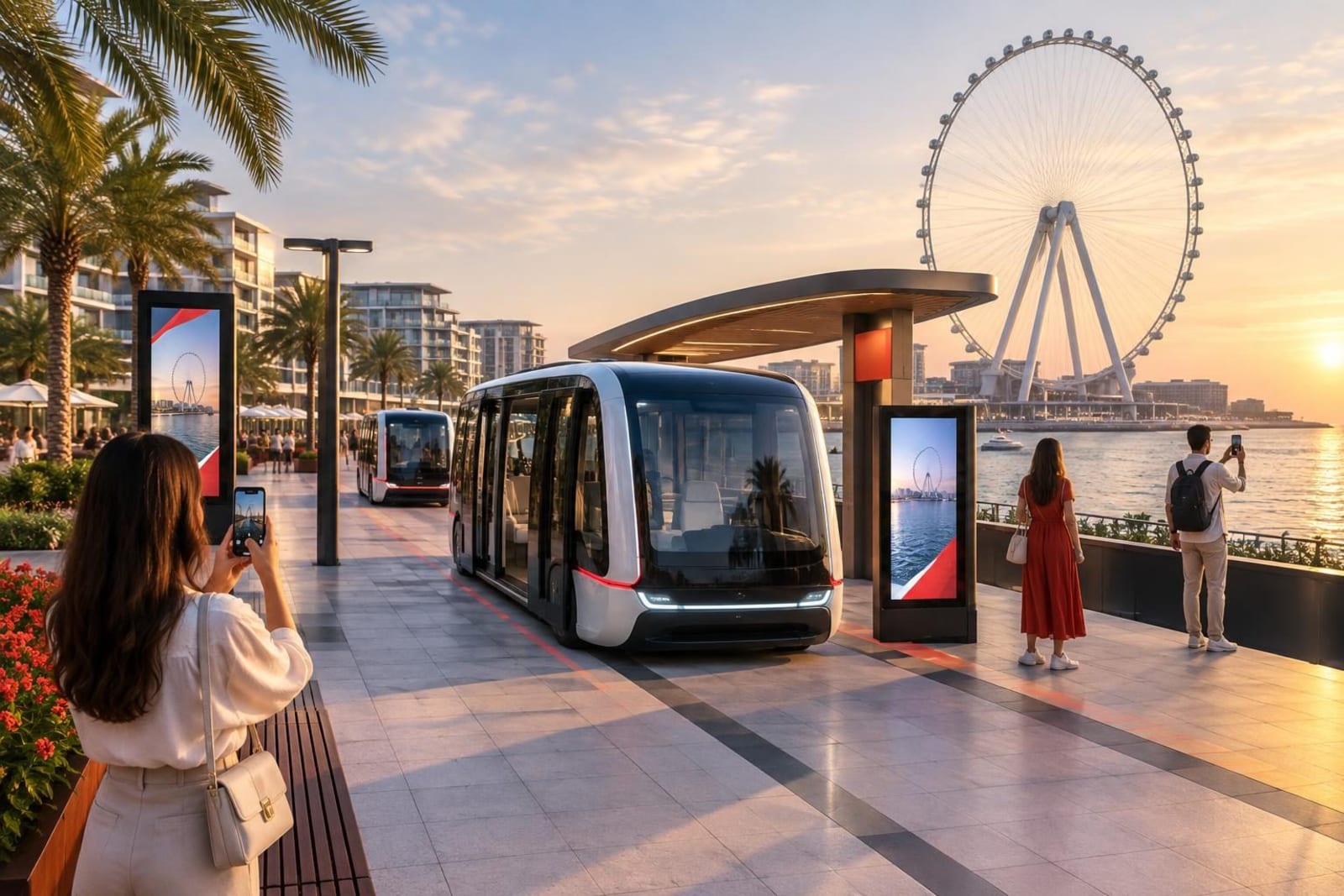
The Bluewaters trial matters because it sits at the point where transport becomes visible to the public. The National reported that Dubai’s RTA launched the four-week Glydways trial at Bluewaters Island on 11 October 2026, with autonomous electric pods running on dedicated guideways separate from general traffic. That matters for marketers because dedicated infrastructure creates a defined audience flow, not a vague citywide spread.
For destination brands, the value is not only movement. It is attention. People notice a new transport format, talk about it, photograph it and compare it with what they already know. That creates a practical opening for Bluewaters brand activations, especially when the activation is close enough to the station to feel connected and simple enough to understand at a glance.
What makes a transit trial usable for marketing
There are three useful conditions. First, the audience is already in a place with reasons to linger. Second, the transport node is temporary or trial based, which makes the story more newsworthy than an ordinary stop. Third, the experience is easy to explain in one sentence. The Glydways trial fits all three. According to Driverless.news, the pods seat four to six passengers, travel at speeds of up to 50 km/h and offer a 250 km range per charge. Those are concrete details people can repeat.
That repeatability is important. If a person can retell the experience in a few words, they are more likely to share it on social media and more likely to remember the brand attached to it. The brand does not need to own the transit system to benefit from the moment. It needs to be present in a way that feels useful, not forced.
For retail and hospitality operators nearby, a trial like this can help shorten the gap between intent and visit. A visitor sees the pod, sees a message or offer nearby, and has a cleaner reason to detour. If your business depends on repeat visits or venue guests, the right loyalty mechanics can help you turn that first visit into another one, which is where venue rewards and repeat-visit programmes become practical rather than decorative.
| Factor | Bluewaters autonomous pod trial | Typical static destination touchpoint |
|---|---|---|
| Operating window | Four weeks | Ongoing, without a built-in trial story |
| Pod capacity | Four to six passengers | Not applicable |
| Speed | Up to 50 km/h | Not applicable |
| Range | 250 km per charge | Not applicable |
Source: Red Dot Marketing Research, compiled from the sources listed at the end of this article. Figures are indicative and vary by brand and campaign.
Where phygital consumer experiences actually work
Phygital consumer experiences UAE projects often fail when the digital layer is decorative and the physical layer does all the work. Around a transport trial, the better approach is the opposite. The physical node has to handle wayfinding and arrival. The digital layer should add context, utility or a reason to share. If it does not improve the visit, people ignore it.
Retail: make the stop shoppable, not just branded
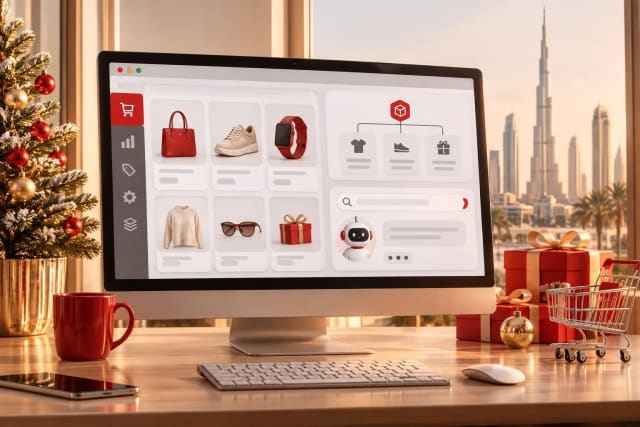
Retail works best when the experience turns curiosity into a clear next step. A screen showing nearby collections, a QR code that opens a route-specific offer, or an AR panel that links the pod stop to a store window are all simple options. The useful rule is to keep the action under one minute. If the visitor has to think too hard, the moment is gone.
Near a transport node, signage should answer three questions fast: where am I, what can I do here and why now. Promotions tied to the ride itself are stronger than generic vouchers because they belong to the place. That is the core of experiential retail marketing: create a reason to move from viewing to visiting without making the audience do extra work.
Hospitality: use arrival as part of the stay
Hotels and leisure venues can treat the ride as an arrival sequence, not just a transfer. That does not mean wrapping a pod in heavy branding. It usually means small signals, such as welcome screens, a short pre-arrival message, staff awareness of the pod schedule and packages that make arrival feel planned. A traveller who knows the ride is part of the experience is more likely to talk about it later.
Hospitality campaigns also benefit from fewer moving parts. If the pod journey is meant to feed a stay, a spa booking or dinner reservation, the offer should be visible before the guest arrives. If it is hidden at check-in, the chance has already passed.
Destination brands: create content people can use
For destination marketers, the pod station can become a content node rather than just a transit point. That means short-form video prompts, creator-friendly sightlines and a reason for people to film the moment without having to ask staff for help. The strongest content is practical: a view, a route, a timed departure, a clear arrival point.
Dubai’s public-facing transport experiments already attract attention, so the job is to make the place more useful than the novelty. If a brand can help a visitor orient themselves, discover a nearby venue or book a visit, the content becomes part of the trip rather than an interruption.
Activation playbooks for retail, hospitality and destinations
Brands should think in terms of playbooks, not one-off ideas. A good transit activation has a clear objective, a short lifespan and a way to keep the message alive after the physical moment is over. Around Bluewaters, the best fit is an activation that can work in daylight, after dark and at different visitor speeds, from casual passers-by to people already heading to a venue.
Retail playbook
Start with a simple map of the customer path: pod arrival, first sightline, decision point and store entry. Then place one action at each point. At arrival, use an attention-grabbing but low-friction cue. At decision point, show product relevance. At store entry, reward the visit. If you are planning for a short run, keep the offer easy to fulfil and easy to measure. Avoid mechanics that depend on staff improvisation.
Common retail formats include digital kiosks, limited-time bundles and QR-led sampling bookings. The strongest versions are tied to nearby stock, nearby categories and nearby intent. A beauty brand, fashion retailer or homeware store can all use the station as a trigger, but only if the offer is local to the route and immediate in its benefit.
Hospitality playbook
For hotels and leisure operators, the best plan is to connect transit visibility to booking behaviour. That can mean transportation-inclusive packages, branded arrival messages or an experience that starts before check-in. Keep the creative calm. Guests do not want a gimmick on top of a transfer; they want reassurance that the journey is understood and that the property is easy to reach.
When the goal is occupancy or spend per visit, the key measure is not just impressions. Track bookings, arrival-source fields, redemption of route-based offers and guest feedback at check-out. Results vary by industry and campaign setup, so a format that works for one property may be too much, or too little, for another.
Destination playbook
Destination brands can use the station as a temporary editorial asset. That means designing for press, creators and visitors at the same time. Build one clean visual feature, one clear message and one easy call to action. If the node is new enough to attract first-time curiosity, your job is to help visitors understand the place quickly enough to move on foot, not just look.
Use the trial window to test creative that feels native to the location. A station screen can point people to dining, retail or events. A short-form video capture point can turn riders into publishers. A wayfinding overlay can connect the novelty of the pod to the normal business of visiting the area.
Measurement, operations and common pitfalls
Transit-linked marketing can fail in very ordinary ways. The offer is unclear. The message is too far from the station. Staff are not briefed. The content looks like a generic city ad. None of those problems are glamorous, but they are the ones that ruin a campaign.
Measurement should be equally practical. Pick a small set of signals that connect the activation to business outcomes. For retail, that might be footfall, offer redemptions and store visits during the trial period. For hospitality, it might be package uptake, check-ins tied to the route and dining bookings. For destinations, it may be dwell time, social posts and event attendance. Do not chase every possible metric at once.
⚠️ Common Mistakes to Avoid
- Branding the station too heavily: People need orientation first. If signage competes with wayfinding, the experience gets ignored or resented.
- Using a generic promotion: A blanket discount is easy to forget. Tie the offer to the pod route, arrival point or nearby venue instead.
- Making the digital layer the main event: QR codes and screens should support the visit, not replace the physical experience.
- Ignoring staff briefings: Frontline teams need to know what the activation is, who it is for and how to explain it in one sentence.
Short trial windows reward tight approvals and simple production. If you are planning artwork, signage, content or an arrival offer, start with what can be installed, tested and removed cleanly. The more temporary the transport moment, the less room there is for slow sign-off cycles and overbuilt assets.
Planning around a four-week window
A four-week trial changes the timing of the campaign. There is no space for a long awareness build and then a separate conversion phase. Everything has to move together: launch, visibility, engagement and follow-up. That is why Bluewaters brand activations should be planned as short sprints, with creative that can be swapped quickly if something is not working.
A practical sequence for brands
Week one should focus on visibility and clarity. People need to see what the activation is and why it matters. Week two should push engagement. That may mean a live content moment, a creator visit or a redemption mechanic. Week three should tighten the message around the best-performing audience behaviour. Week four should carry a final call to action and collect data while the trial is still live.
The point is not to fill every day with a new idea. It is to keep the same idea legible while public interest is high. Autonomous mobility is new enough for most visitors to notice once. The brand has to make that first look useful. If you need a place to turn that visibility into repeat visits or venue traffic, a dedicated loyalty flow can support the handover from curiosity to return behaviour.
For brands working in destination marketing Dubai, the useful question is simple: what do people do after they see the pod? If the answer is nothing, the campaign is decoration. If the answer is walk, book, visit, share or return, the transit node is doing real marketing work. The best activations will be the ones that fit the route, respect the pace of the place and stay visible without getting in the way.
Frequently Asked Questions
What is the Bluewaters Glydways trial in Dubai?
It is a four-week trial launched by Dubai’s RTA at Bluewaters Island on 11 October 2026. The autonomous electric pods run on dedicated guideways separate from general traffic. The trial is intended to test how this kind of transit can fit into Dubai’s wider transport network.
How can brands use an autonomous transit trial for marketing?
Brands can place simple, useful touchpoints around the station, route and arrival point. That can include QR-led offers, wayfinding, short-form content prompts, destination screens or route-based package deals. The best use is to connect attention to a nearby visit, not to turn the station into a cluttered ad space.
Why does this matter for destination marketing Dubai?
Because transport trials create public curiosity and clear movement patterns. That gives destination brands a chance to meet people at a moment when they are already deciding where to go next. If the message is useful and local to the area, it can support footfall, social content and direct visits.
What makes phygital consumer experiences UAE campaigns work near transport nodes?
They work when the physical and digital layers each do a specific job. The physical layer should help people orient themselves and move easily. The digital layer should add context, offers or shareable content. If either layer gets in the way, the experience feels like noise rather than service.
What should brands avoid in Bluewaters brand activations?
Avoid heavy branding that gets in the way of wayfinding, generic discounts with no link to the location, and mechanics so complex staff can’t explain them quickly. Short trial windows reward clarity, simple fulfilment and offers that feel specific to the place. Results vary by industry and campaign setup.
Sources & References
- The National, Driverless Glydways electric pods launched on Dubai's Bluewaters Island
- Driverless.news, Dubai Begins Four-Week Trial of Glydways Driverless Pods at Bluewaters
- Social Kandura, Dubai Glydways trial: driverless pods start at Bluewaters
Plan a transit-led activation that people actually use
If you want to turn a transport trial into footfall, content and repeat visits, the creative has to fit the place and the route. Red Dot Marketing can help shape the concept, the offers and the on-ground execution for Dubai venues and destination brands.
Get Free Consultation