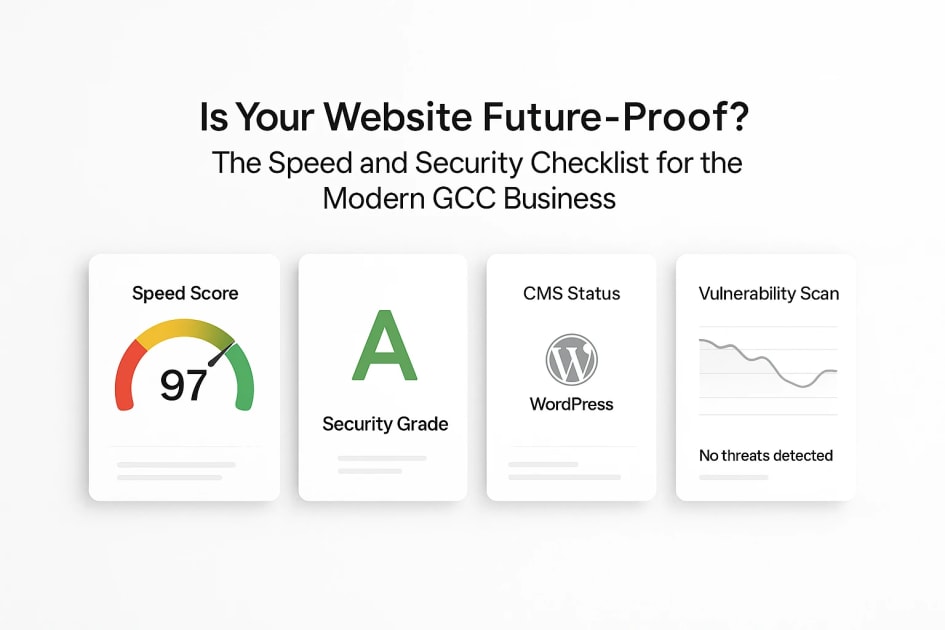
Is Your Website Future-Proof? The Speed and Security Checklist for the Modern GCC Business
Introduction
In today's competitive GCC market, your website is more than just a digital brochure. It's a powerful 24/7 sales and data acquisition engine, constantly working to attract, engage, and convert potential customers. Imagine a virtual storefront that never closes, diligently collecting valuable customer data and driving revenue, even while you sleep. But is your website truly working that hard for you? If it's built on outdated technology, you're not only vulnerable to security threats, but you're also missing out on valuable, speed-driven traffic and potentially losing customers to competitors with more modern online experiences.
According to a study by Google, 53% of mobile users will abandon a site if it takes longer than three seconds to load. In a region like the GCC, where mobile penetration is exceptionally high, even a slight delay can significantly impact your bottom line.
As the GCC continues to grow and evolve, it's essential to keep pace with the latest digital trends and best practices. In this article, we'll explore the critical factors to consider when ensuring your website is future-proof, focusing on speed and security.
Choosing the Right Foundation: The CMS Decision
Is your website built on a modern, flexible Content Management System (CMS)? This is the foundation upon which your entire online presence rests. We recommend exploring platforms like HubSpot CMS, WordPress (especially when paired with powerful page builders like Elementor Pro), or even a custom Jamstack solution for optimal performance and scalability.
Why this matters: Outdated platforms can quickly become a liability, requiring extensive development time for even minor updates, creating significant security risks, and hindering your ability to adapt to evolving market demands.
A real-life example: Imagine a Dubai-based real estate company using an outdated CMS. They want to quickly update property listings with high-resolution images and virtual tours to cater to international investors. With an inflexible CMS, this update could take days, potentially losing them leads to competitors who can showcase their properties more effectively.
Actionable tip: Conduct a CMS audit to assess your current CMS's capabilities, security vulnerabilities, and ease of use. Compare it to modern alternatives and identify areas where upgrading or migrating to a new platform could significantly improve your website's performance.
Expert Insight: When selecting a CMS, consider factors like scalability, customization options, and community support. A robust CMS will help you build a strong online presence and adapt to changing market conditions.
Building Confidence: Security and Trust Signals
In a region with a heightened awareness of cyber threats, particularly in the financial and governmental sectors, security is a paramount trust signal for your visitors. A secure website not only protects your data and your customers' information but also builds credibility and fosters trust, encouraging visitors to engage with your content and complete transactions.
What to do:
-
Implement multi-factor authentication (MFA) for all admin users: This adds an extra layer of security, making it significantly harder for unauthorized individuals to access your website's backend.
-
Conduct regular security audits: Engage a cybersecurity firm to perform penetration testing and vulnerability assessments to identify and address potential weaknesses in your website's security.
-
Prominently display trust seals: Showcase secure payment gateway logos, verified SSL certificates, and compliance badges (like GDPR or PCI DSS) to reassure visitors that their information is protected.
-
Keep your CMS and plugins updated: Regularly update your CMS and all installed plugins to patch security vulnerabilities and benefit from the latest security enhancements.
A cautionary tale: An Abu Dhabi-based e-commerce store suffered a data breach due to an outdated plugin. Customers lost trust, and the store faced significant financial losses and reputational damage.
Actionable tip: Implement a security monitoring system that alerts you to suspicious activity on your website, allowing you to proactively address potential threats before they escalate into full-blown security breaches.
Industry Benchmarks: According to a study by Cybersecurity Ventures, the average cost of a data breach in the GCC region is approximately $2.2 million.
Focusing on User Experience: Speed Beyond Metrics
While Google PageSpeed Insights and other speed metrics provide valuable data, the ultimate goal is to deliver a fantastic User Experience (UX). A fast-loading website is not just about pleasing search engines; it's about ensuring that your visitors can quickly and easily access the information they need, leading to increased engagement, higher conversion rates, and improved customer satisfaction.
Key factors that contribute to a great UX:
-
Optimize images: Use compressed image formats like WebP and ensure images are appropriately sized for the display resolution.
-
Leverage browser caching: Enable browser caching to store static assets (like images and CSS files) on the user's device, reducing the need to download them on subsequent visits.
-
Minimize HTTP requests: Reduce the number of HTTP requests by combining CSS and JavaScript files and using CSS sprites.
-
Use a Content Delivery Network (CDN): Distribute your website's content across multiple servers around the world to ensure that users can access it quickly, regardless of their location.
-
Mobile-first design: Ensure your website is fully responsive and optimized for mobile devices, as a significant portion of internet users in the GCC access the web via their smartphones.
A success story: A Saudi Arabian travel agency noticed a high bounce rate on their website, particularly among mobile users. After optimizing their website's speed and mobile responsiveness, they saw a significant increase in engagement and booking conversions.
Actionable tip: Use Google Analytics to track key UX metrics like bounce rate, time on page, and conversion rates. Identify areas where users are experiencing friction and implement changes to improve their experience, driving growth and revenue for your business.
Expert Insight: Prioritize a mobile-first design to cater to the growing number of mobile users in the GCC region. This will not only improve your website's UX but also enhance its search engine rankings.
The Red Dot Difference: Building More Than Websites
At Red Dot, we don't just build websites; we build marketing technology platforms designed to drive growth and achieve your business objectives. Our Web Development team integrates technical SEO best practices, comprehensive data tracking, and powerful automation systems from the very beginning of the project.
Ready to unlock your website's full potential and drive business growth? Discuss your next web development project with us today and discover the Red Dot difference.
⚠️ Common Mistakes to Avoid
-
Not prioritizing security: Neglecting website security can lead to data breaches, financial losses, and reputational damage.
-
Ignoring user experience: Failing to optimize website speed and mobile responsiveness can result in high bounce rates and lost conversions.
🎯 Key Takeaways
-
Choose a modern, flexible CMS to ensure your website's foundation is strong and scalable.
-
Prioritize security by implementing MFA, conducting regular security audits, and displaying trust seals.
-
Optimize website speed and mobile responsiveness to deliver a fantastic user experience.
Frequently Asked Questions
What is the most important factor in choosing a CMS?
Scalability and customization options are crucial when selecting a CMS to ensure your website can grow with your business.
How can I improve my website's security?
Implement MFA, conduct regular security audits, and display trust seals to enhance your website's security.
Sources and References
Methodology: This article synthesizes information from industry reports, platform documentation, and our agency's direct experience managing digital campaigns in the UAE and GCC region.
Get Started Today!
Ready to unlock your website's full potential and drive business growth? Discuss your next web development project with us today and discover the Red Dot difference.
Get Free Consultation